
Intellectual Property (IP) refers to creations of the mind, such as inventions, designs, trademarks, and artistic works, which hold significant value for your businesses in protecting competitive advantage. In today’s globalized marketplace, enforcing IP rights is crucial to maintain that edge and prevent unauthorized use of valuable assets.
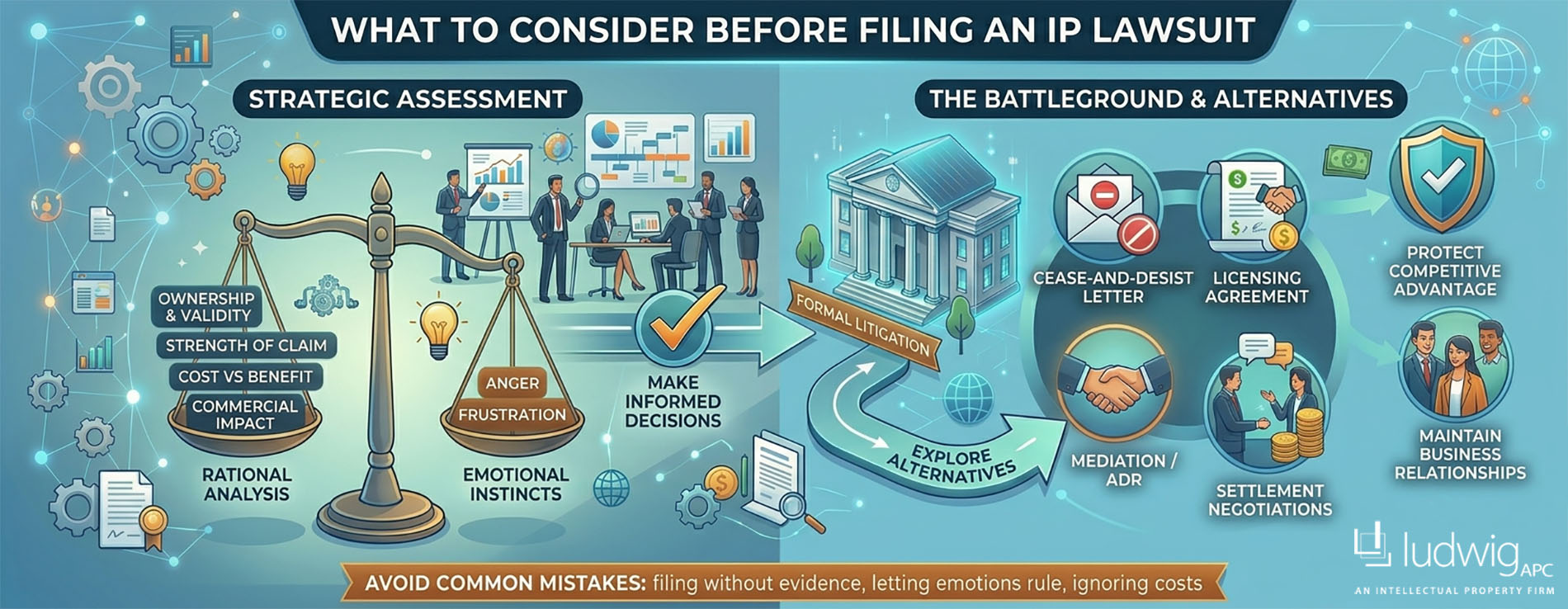
However, rushing into IP litigation without carefully considering the legal, financial, and strategic implications can lead to unwanted risks. Deciding whether to file an IP lawsuit requires a thoughtful approach, balancing emotional instincts with rational analysis.
This article will discuss the key IP lawsuit considerations any business should think of before making such a decision.
What Is an IP Lawsuit?
An IP lawsuit involves legal action taken to protect intellectual property rights when they have been infringed upon. These lawsuits typically arise when a business or individual believes that their intellectual property has been used without permission, and they seek to enforce their rights through legal channels.
Types of IP lawsuits:
1. Trademark Infringement
Trademark infringement occurs when another party uses a trademark that is identical or confusingly similar to a registered trademark, potentially leading to consumer confusion. Many companies file these lawsuits to protect their brand identity and reputation.
2. Copyright Infringement
Copyright infringement happens when someone reproduces, distributes, or displays a copyrighted work without permission. Typically, you can copyright music, literature, software, or other creative works. Many businesses file these IP lawsuits to safeguard their creative assets and prevent unauthorized copying.
3. Patent Infringement
Patent infringement takes place when another party makes, uses, or sells a patented invention without the patent holder’s consent. Typically, companies or IP owners pursue these lawsuits to protect their innovative products and technologies from competitors who may unfairly benefit from their ideas.
4. Trade Secret Misappropriation
Trade secret misappropriation occurs when confidential business information, such as formulas, processes, methods, or data, is acquired, used, or disclosed through improper means. Because trade secrets derive economic value from remaining secret, the law provides strong civil remedies when someone steals or leaks this information. These lawsuits help businesses protect competitive advantages that cannot be patented or publicly disclosed
Understanding the distinctions between these four types helps clarify which legal pathway applies to your situation. The table below summarizes the key differences at a glance.
| Type of Infringement | What It Protects | Common Example |
| Trademark Infringement | Brand name, logo, identity | Competitor using a confusingly similar logo |
| Copyright Infringement | Creative works (music, software, literature) | Unauthorized reproduction of original content |
| Patent Infringement | Inventions and technologies | Competitor manufacturing a patented product |
| Trade Secret Misappropriation | Confidential business information | Former employee taking proprietary formulas, recipes, processes to a competitor |
Each type carries its own filing requirements, evidence standards, and enforcement considerations, so identifying the right category early is an important first step.
Common Reasons to Initiate IP Lawsuits
Generally, IP lawsuits are initiated to protect a company’s market position, prevent unauthorized use of its intellectual property, and recover damages for any losses incurred. The aim behind these IP lawsuits is to halt infringement activities, secure a competitive advantage, and uphold the IP holder’s rights.
Difference Between Enforcement and Over-Litigation
Enforcement is the process of taking legal action to protect and defend intellectual property rights when they have been infringed upon, often as a last resort after other options have been exhausted.
Over-litigation, on the other hand, refers to excessive or unnecessary legal actions taken, which may harm a business’s reputation, drain resources, and lead to inefficient outcomes. As a business or IP owner, you must strike a balance between enforcing your rights and avoiding over-litigation that can be costly and counterproductive.
| In Short: An IP lawsuit is a formal legal mechanism to enforce your rights, but understanding the difference between enforcement and over-litigation is essential before proceeding. |
When Should You Consider Filing an IP Lawsuit?
Filing an IP lawsuit should not be a decision made lightly, and there are key situations where it may become necessary. Understanding when to take legal action helps avoid premature litigation and protects your intellectual property strategically.
| If… | Then… |
| Infringement is ongoing despite a cease-and-desist | Consider formal litigation |
| The financial loss is minimal and isolated | Explore licensing or settlement first |
| You lack clear ownership documentation | Strengthen your IP position before filing |
| The opposing party is willing to negotiate | Pursue mediation or Alternative Dispute Resolution before court |
| Urgency is high and damage is escalating | Consult IP counsel immediately |
Below are key IP lawsuit considerations where legal action might be appropriate.
Ongoing or Repeated Infringement
If an infringing party continues to use your intellectual property despite previous warnings or attempts at resolution, filing a lawsuit may be necessary to stop the infringement. Repeated violations can undermine the value of your intellectual property and require stronger enforcement to protect your rights.
Significant Financial Losses or Reputational Harm
If the infringement leads to significant financial losses or damages to the reputation of your business, a lawsuit may be needed to recover those damages and stop the ongoing harm. This could include lost revenue, decreased market share, or damage to brand reputation due to unauthorized use of your IP.
Competitor Gaining Unfair Market Advantage
When a competitor gains an unfair market advantage by infringing on your intellectual property, a lawsuit can help protect your market position. IP infringement can give competitors an improper edge, and legal action may be necessary to level the playing field and restore your business’s competitive advantage.
| Scenario: A software startup discovers a larger competitor has integrated its patented algorithm into a new product line without a license. Despite holding a valid patent, the startup first attempts licensing discussions before escalating to formal litigation, ultimately reaching a royalty agreement without court involvement. |
Failure of Negotiations or Cease-and-Desist Efforts
If efforts such as cease-and-desist letters or negotiations fail to resolve the issue, it may be time to consider a lawsuit. When an infringing party refuses to comply or engage in meaningful discussions, litigation becomes a viable option to enforce your rights and protect your IP.
Clear Evidence and a Strong Legal Position
Filing a lawsuit is often appropriate when there is clear, compelling evidence that your intellectual property has been infringed and you have a strong legal case. Without strong evidence and a solid legal position, pursuing litigation may result in unfavorable outcomes and wasted resources.
Urgency in Preventing Further Damage
In situations where immediate action is required to prevent further damage or harm to your business, an IP lawsuit might be necessary. This is especially true if the infringing actions are ongoing or if the violation poses an immediate threat to your IP and business interests.
| Pro Tip: Before filing, document every instance of infringement with timestamps, screenshots, sales data, and any prior communications. This evidence log becomes the foundation of your legal case and strengthens your position during early negotiations. |
8 Key IP Lawsuit Considerations to Take into Account Before Filing
Before filing an IP lawsuit, carefully evaluate several factors that could influence the outcome of the case. Assessing the strength of your claim, the potential costs, and the broader implications of litigation will help you make an informed decision.
Below are important elements to consider before taking legal action.
1. Ownership and Validity of IP
One of the first IP lawsuit considerations is to be sure you have clear ownership of the intellectual property and that it’s legally valid. A weak or invalid IP claim can lead to a failed lawsuit and damage your reputation. Confirming the strength of your IP rights before proceeding is crucial for a successful legal action.
2. Strength of the Infringement Claim
The strength of your infringement claim plays a significant role in determining the likelihood of success. Think of evaluating the evidence supporting the infringement and the legal grounds for your case. A strong, clear infringement claim increases your chances of winning the lawsuit and securing damages.
3. Commercial Impact
Another important IP lawsuit consideration is the potential commercial impact, both positive and negative. Litigation can disrupt business operations, but it may also safeguard your revenue and market position. Weighing the potential long-term benefits of protecting your IP from possible short-term disruptions is important.
4. Cost vs Benefit Analysis
Filing a lawsuit involves high financial costs, including legal fees and court expenses. Consider performing a cost vs benefit analysis to determine whether the potential rewards, such as damages or market protection, justify the costs. Legal action might be necessary, but it must be a financially sound decision.
5. Jurisdiction and Legal Strategy
One more critical IP lawsuit consideration is determining the appropriate jurisdiction for filing your lawsuit, as this can affect the outcome based on local laws and regulations. Additionally, consider planning your legal strategy, including whether to pursue litigation or explore alternative dispute resolution options.
6. Opponent Analysis
Think of assessing the strength of the opposing party. Analyzing their resources, legal tactics, and willingness to settle is one of the most critical IP lawsuit considerations.
Understanding your opponent’s position can help you determine whether to proceed with litigation or seek a resolution outside of court. This analysis is critical for preparing your case and managing expectations.
7. Confidentiality and Business Risks
Litigation may expose confidential business information, potentially harming your competitive edge or revealing trade secrets. Consider the business risks involved, including the potential loss of confidentiality and the impact of public exposure during the trial. Weighing these risks against the need to protect your IP is a smart move.
8. Public Relations and Brand Impact
Consider the potential public relations implications of IP litigation. Legal action can affect your brand image, particularly if it is a high-profile case. Negative publicity or a prolonged legal battle may harm customer relationships, so it’s important to evaluate the potential impact on your business reputation.
Alternatives to Filing an IP Lawsuit
Before resorting to a formal IP lawsuit, consider several alternatives that may offer a quicker, less costly resolution. These options can help protect your intellectual property while maintaining business relationships and avoiding the complexities of litigation.
Here are some common alternatives to consider.
Cease-and-Desist Letter
A cease-and-desist letter is a formal request to stop an infringing activity. It serves as a warning to the infringing party to halt their actions before legal action is taken. This method is often effective in resolving disputes without the need for costly litigation and can protect your intellectual property in the short term.
Licensing Agreements
A licensing agreement allows another party to use your intellectual property under specified conditions in exchange for compensation, such as royalties. This approach provides a potential revenue stream without the need for a lawsuit, while still maintaining control over how your IP is used and getting legal protection.
Mediation and Arbitration
Mediation and arbitration are forms of alternative dispute resolution (ADR) that involve a neutral third party helping both sides reach an agreement. These methods are less formal than litigation and can resolve disputes more quickly and cost-effectively, all while preserving business relationships and avoiding public court proceedings.
Settlement Negotiations
Settlement negotiations involve direct discussions between the parties involved in the dispute, aiming for a mutually agreed-upon resolution without the need for a lawsuit. These negotiations can include financial settlements or licensing arrangements. Settling out of court can save time, legal fees, and the potential negative consequences of a lengthy litigation process.
| Pro Tip: Always attempt at least one alternative resolution method before filing. Courts in many jurisdictions now look favorably on parties who demonstrate good-faith efforts to settle, and it can strengthen your position if litigation does proceed. |
Each alternative serves a different purpose depending on the stage of the dispute and the relationship between the parties. The table below outlines when each option works best and what it offers.
| Alternative | Best Used When | Key Benefit |
| Cease-and-Desist Letter | Infringement is clear and early-stage | Low cost, immediate formal warning |
| Licensing Agreement | Infringer has commercial value to your business | Creates revenue without litigation |
| Mediation / Arbitration | Both parties are open to negotiation | Faster, less costly, confidential resolution |
| Settlement Negotiation | Litigation risk is high on both sides | Avoids court costs and public exposure |
Choosing the right alternative early can preserve business relationships, reduce costs, and in many cases produce a more durable resolution than a court ruling alone.
| In Short: Alternatives to litigation are often faster, less costly, and less damaging to business relationships and should always be explored before filing. |
Common Mistakes to Avoid If You Consider Filing an IP Lawsuit
Filing an IP lawsuit can be a complex and costly process. There are several common mistakes that businesses should avoid to increase their chances of success. Being aware of these pitfalls can help you make more informed decisions from the start.
Filing without Strong Legal Evidence
Launching a lawsuit without sufficient legal evidence can undermine your case and lead to unfavorable outcomes. Without clear documentation of the infringement and proof of your IP rights, your lawsuit may lack the necessary foundation, resulting in dismissal or loss. Strong evidence is essential for a successful case.
Ignoring Cost and Time Implications
Litigation can be time-consuming and expensive, often involving substantial legal fees, court costs, and lost business opportunities. Ignoring these implications can lead to financial strain, especially if the case drags on. Carefully evaluate whether the potential benefits of litigation justify the associated costs and delays.
Letting Emotions Drive Decisions
Letting emotions such as anger or frustration drive your decision to file an IP lawsuit can cloud your judgment and lead to hasty actions. Strategic decision-making based on a clear understanding of the situation, rather than emotional impulses, will result in more favorable outcomes and a better long-term business strategy.
| Watch Out: Emotion-driven filings are one of the leading causes of early case dismissal. If your primary motivation is frustration rather than commercial harm, it may be worth reassessing the decision with counsel before proceeding. |
Overlooking Jurisdictional Complexities
Filing in the wrong jurisdiction can complicate your case, leading to delays or even dismissal. Different jurisdictions may have varying laws and procedures, so overlooking these complexities can significantly impact your lawsuit’s effectiveness. Consider choosing the jurisdiction where your IP rights are best protected.
Failing to Explore Settlement or ADR Options
Failing to consider settlement or alternative dispute resolution (ADR), such as mediation or arbitration, can lead to unnecessary litigation. These methods often offer quicker and more cost-effective resolutions, preserving business relationships and avoiding the expense and public nature of a trial. Always explore these alternatives first.
Not Consulting Experienced IP Counsel Early
Attempting to navigate an IP lawsuit without consulting experienced legal counsel can lead to costly mistakes. A seasoned IP litigation attorney can guide you through the process, help assess the strength of your case, and provide valuable insights into the best course of action. Early legal advice is critical for success.
Make Informed Decisions: Take IP Lawsuit Considerations into Account
Deciding to file an IP lawsuit is a significant decision that should be approached strategically. By taking the key IP lawsuit considerations into account, such as evaluating alternatives and avoiding common mistakes, you can better protect your intellectual property and make informed decisions that benefit your business in the long run. Protecting your IP effectively helps you maintain a competitive advantage.
At Ludwig APC, we understand the complexities of intellectual property disputes and are here to guide clients through every step of the process. If you’re considering taking legal action to protect your intellectual property, contact us today to schedule a free consult to discuss how we can help you safeguard your IP and make the best choices for your business.
Frequently Asked Questions (FAQs)
1. What is the first step before filing an IP lawsuit?
While all situations are unique, the first practical step is confirming clear ownership and legal validity of the IP in question. From there, documenting evidence of infringement and sending a formal cease-and-desist letter is generally recommended before any formal legal action is considered.
2. How long does an IP lawsuit typically take?
Timelines vary significantly depending on jurisdiction, case complexity, and whether the matter settles early. Many disputes are resolved through settlement or ADR well before reaching trial, which can considerably shorten the overall process.
3. Can a small business afford to file an IP lawsuit?
Cost is one of the most important considerations for any business evaluating litigation. Starting with lower-cost options such as cease-and-desist letters and ADR, can protect IP rights at a fraction of the cost of full litigation. Consulting experienced IP counsel early helps identify the most financially sound path forward.
4. What happens if I file in the wrong jurisdiction?
Filing in the wrong jurisdiction can lead to delays, procedural complications, or outright dismissal of the case. Jurisdiction selection should be based on where the infringement occurred, where your IP rights are registered, and where enforcement is most practical and effective.
5. Is it possible to protect my IP without going to court?
In many cases, yes. Alternatives such as cease-and-desist letters, licensing agreements, mediation, and settlement negotiations can resolve IP disputes effectively without the time, cost, and public exposure of formal litigation. These options should always be explored before proceeding to court.