
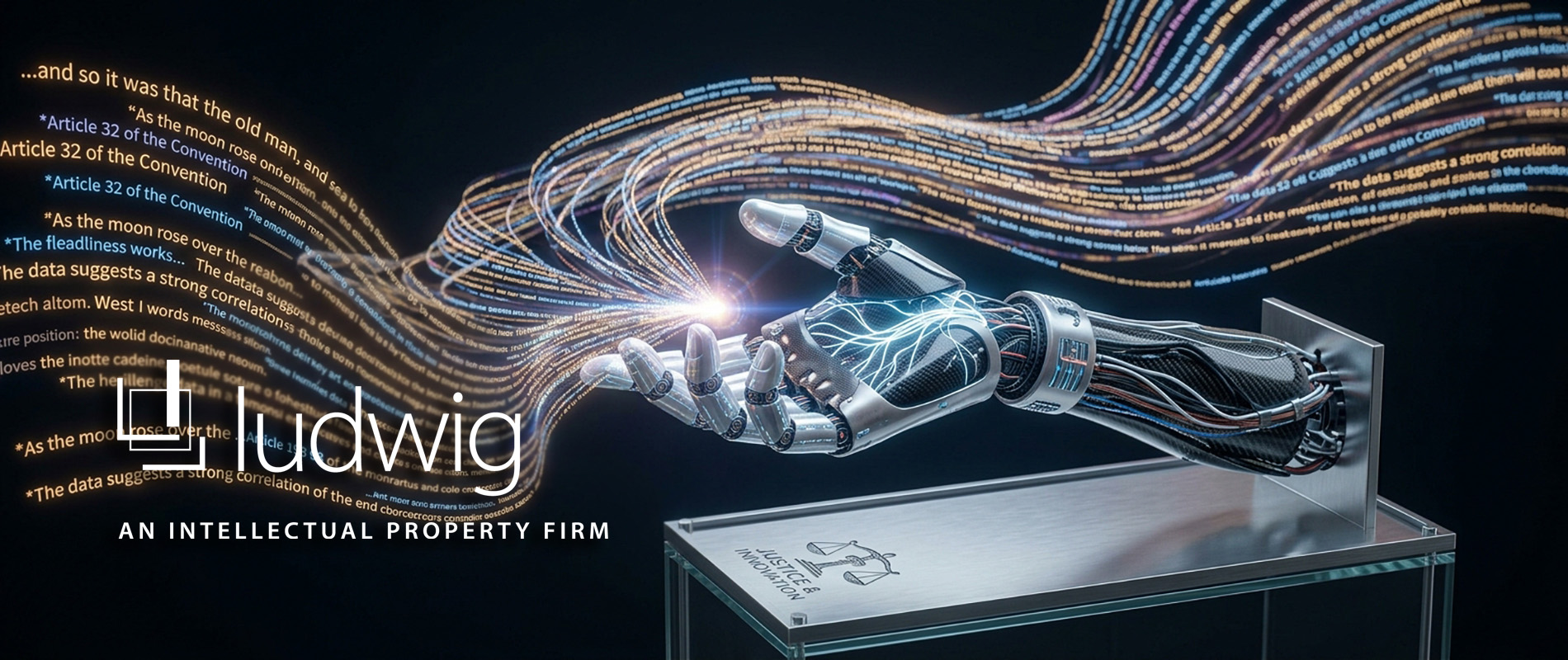
Artificial intelligence continues to transform how brands create content, analyze information, develop products, and engage customers. From marketing copy and software code to images, videos, and customer communications, AI tools are now deeply embedded in everyday business operations.
At the same time, our courts are being asked to address important legal questions surrounding AI and copyright, namely: “Can AI companies train their models using copyrighted works without permission?” and “What rights exist in content generated by those systems?”
Ludwig, an IP law firm, views these questions as some of the most important IP challenges facing businesses and innovators today. As AI adoption accelerates, we must understand not only the opportunities the technology creates, but also the evolving legal risks surrounding copyright ownership, licensing, and content use.
For businesses that use AI, the answers matter. Ongoing copyright-related lawsuits involving major AI developers, including OpenAI, Meta, Anthropic, and Midjourney, are likely to shape how AI systems are trained, how content is licensed, and how IP rights are enforced for years to come. While many view these cases as disputes between large technology companies and content owners, the eventual outcomes could affect businesses of every size that rely on AI-generated content.
Why AI Copyright Litigation Matters
Copyright law was designed to protect original creative works. AI technologies, however, have introduced entirely new questions about how content is created, used, stored, and reproduced.
Many AI systems are trained using enormous amounts of text, images, music, videos, and other materials gathered from across the internet. Copyright owners have increasingly challenged whether that use requires permission, compensation, or licensing agreements.
The central legal issues extend beyond training data itself. Courts are also examining whether AI-generated outputs may infringe existing copyrights, whether AI companies can rely on fair use defenses, and what ownership rights may exist in AI-generated content.
For businesses investing in AI tools, these questions are no longer theoretical. They directly affect risk management, content strategies, licensing decisions, and IP protection.
Recent Developments in High-Profile Cases
Several high-profile cases are helping shape the legal conversation around AI training, copyright ownership, and IP rights. While the facts and claims differ from case to case, each highlights unresolved questions that could influence how AI technologies are developed, trained, and commercialized in the years ahead.
OpenAI
Perhaps the most closely watched litigation involves The New York Times, authors, and other copyright owners pursuing claims against OpenAI and Microsoft. Plaintiffs allege copyrighted works were used without authorization to train AI systems, while the defendants argue that training constitutes fair use. The case remains closely watched as the parties seek clarification on fundamental copyright and fair-use questions that could influence future AI litigation. A court ruling has not yet been issued, leaving significant legal uncertainty for both AI developers and content owners.
Meta
Meta has faced multiple copyright lawsuits related to its Llama AI models. Authors and publishers have alleged that copyrighted books and written materials were used during AI training without authorization. Some litigation has focused not only on training activities but also on how training materials were acquired. Meta secured an early fair-use victory related to AI training, but other claims involving the sourcing of training materials remain active. Additional copyright lawsuits brought by publishers and other content owners are still pending.
Anthropic
Anthropic, developer of Claude, has been involved in significant copyright litigation brought by authors concerning books allegedly used in training its AI models. In 2026, a court-approved settlement in Bartz v. Anthropic resolved major claims involving copyrighted books through what has been described as the largest copyright settlement in U.S. history, providing approximately $1.5 billion in compensation covering roughly 482,000 works. Meanwhile, other litigation against Anthropic involving music publishers and copyright owners remains active.
Midjourney
Image-generation platform Midjourney remains at the center of ongoing litigation involving artists, copyright owners, and major entertainment companies. Plaintiffs allege copyrighted images and creative works were used without authorization to train AI systems and generate similar content. Several of these cases remain active.
What These Cases Could Mean for AI-Generated Content
One reason businesses and innovators should pay close attention is that the outcomes of these and other cases may affect both AI developers and AI users.
If courts determine that certain training activities require licenses, AI providers may need to modify training practices, negotiate new licensing agreements, or alter available features. Those costs and operational changes could eventually affect businesses that rely on AI tools.
Questions surrounding ownership also remain important. The U.S. Copyright Office has repeatedly emphasized that copyright generally protects human authorship rather than purely machine-generated works. As businesses increasingly rely on AI-generated text, images, videos, and other content, understanding what rights exist in those outputs becomes increasingly important. Resources such as the NIST Artificial Intelligence Program and the Stanford AI Index can help organizations stay current on developments affecting AI innovation, governance, and intellectual property rights.
Considerations for Businesses Using AI
Ongoing litigation should not be viewed as a reason to abandon AI use. Instead, it highlights the value of thoughtful planning, risk assessment, and ongoing attention to evolving legal developments.
Understand Your AI Tools
Understand which AI systems you use, what terms govern those services, and what protections are available under vendor agreements.
Review Ownership and Usage Rights
Evaluate whether you have appropriate rights to use, modify, publish, or commercialize AI-generated content.
Maintain Human Involvement
Human review and editorial oversight remain valuable not only from a quality standpoint but also when addressing questions involving IP ownership and originality.
Develop Internal AI Policies
Establish clear policies governing employee use of AI tools, approved platforms, content review procedures, and IP considerations.
Monitor Legal Developments
AI-related copyright law continues to evolve rapidly. Those who stay informed will be better positioned to adapt to regulatory and legal changes.
How Ludwig Sees It
Ludwig views these and other related lawsuits as part of a broader shift in how IP law is adapting to emerging technologies. The legal questions being addressed today are likely to influence how organizations develop, license, acquire, commercialize, and protect AI-driven innovations in the future.
Businesses that use AI should not assume that IP risks exist only for technology companies. Organizations that create content, market products, develop software, or leverage AI-generated materials may all encounter copyright-related questions.
The Ludwig team works with businesses, entrepreneurs, innovators, and technology companies to evaluate IP strategies, assess legal risks, protect valuable assets, and navigate emerging technology issues.
Whether you are developing AI-enabled products, implementing generative AI solutions, negotiating licensing agreements, or evaluating copyright exposure, proactive planning is often the best defense.
Frequently Asked Questions
1. Why are AI copyright lawsuits important to businesses?
These cases may influence how AI systems are trained, licensed, and used, potentially affecting businesses that rely on AI-generated content.
2. Which AI companies are involved in major copyright lawsuits?
OpenAI, Meta, Anthropic, and Midjourney are among the companies involved in high-profile copyright litigation.
3. Can businesses own AI-generated content?
Ownership depends on several factors, including the level of human involvement and applicable copyright laws.
4. Should businesses stop using AI because of these lawsuits?
Not necessarily. Most organizations should focus on understanding risks, implementing policies, and maintaining appropriate oversight.
5. How can businesses reduce legal risks when using AI?
Review vendor terms, develop AI usage policies, maintain human review processes, and seek legal guidance when IP questions arise.
Let’s Work Together: Global Experience, Personal Focus
Artificial intelligence presents exciting opportunities, but it also introduces new IP considerations that businesses and innovators cannot afford to ignore. If your organization is using AI tools, developing AI-powered products, or evaluating copyright and IP risks related to emerging technologies, we encourage you to reach out to Ludwig today at (619) 929‑0873 or consultation@ludwigiplaw.com to arrange a free, no‑strings‑attached consultation.

